


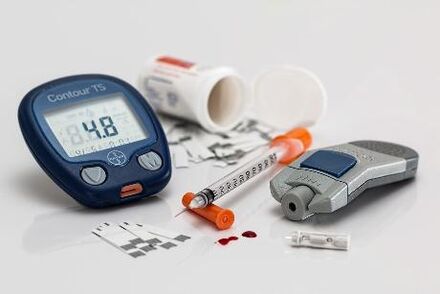
According to statistics, more than 9% of the world's population suffers from diabetes mellitus (DM).The number of undiagnosed cases is about 50% of those officially registered.According to the WHO, this disease is diagnosed in most people only when complications arise.
Definition
Diabetes mellitus, translated from Greek, means "through" - is an endocrine disease, which is based on an absolute or relative lack of insulin in the body, causing metabolic disorders, especially carbohydrates.The main manifestation is prolonged hyperglycemia due to impaired glucose metabolism in the body.It causes damage, dysfunction and failure of various organs, especially eyes, kidneys, nerves, heart and blood vessels.
This disease has been known since the 17th century.BC e.This is confirmed by the Ebers papyrus, which describes a condition accompanied by excessive urination.The name "diabetes" was given to the pathology by the Greek physician Demetrios of Apamania, who lived in the 2nd century BC.e.Not long after, in 1776, the English doctor Dobson discovered a sweet taste in the urine of diabetics, which indicated that it contained sugar.This is how diabetes is called "sugar diabetes."
Causes of diabetes mellitus
The exact etiology is not known with certainty.Among the provoking factors, we can distinguish those that can be controlled and those that cannot.
Risk factors that cannot be changed:
- age 45 years and above;
- descent;
- increased blood sugar in women during pregnancy (gestational diabetes);
- ethnicities with an increased risk of diabetes (African and Hispanic, European);
- diseases of the pancreas - pancreatitis, oncology, etc.
Controllable factors:
- overweight;
- high blood pressure;
- physical inactivity;
- poor nutrition.
Factors that trigger type 1 diabetes:
- Artificial feeding of the baby.Replacing breast milk with formula or cow's milk.It contains 3 times more protein than human milk and 50% more fat.Protein or casein is a complex component in its structure, similar to beta cells.When a child enters the body, the immune system attacks it, but due to structural similarities, pancreatic beta cells also suffer.This is why it is not recommended to give your baby cows milk before the age of 3.
- Viral infection.Rubella, chicken pox, mumps, viral hepatitis, etc.
- Pancreatic tissue hypoxia as a result of vascular pathology.Atherosclerosis, vascular spasm, bleeding and other diseases lead to hypoxia of the islets of Langerhans with its beta cells and reduce insulin secretion.
- Destruction of pancreatic tissue due to alcohol, intoxication, drugs, and oncology.
Type 2 diabetes is provoked by poor nutrition against the background of a decrease in physical activity associated with rapid technological progress and urbanization.This pathology is more common among representatives of the Mongoloid race.
Classification of diabetes
There are two main types of diabetes:
- Type 1 diabetes (T1DM)- can be considered a hereditary autoimmune pathology, where the immune system itself attacks its own pancreatic beta cells.Destruction of glandular tissue can be complete or partial.The pathology is diagnosed in young people and is therefore called juvenile diabetes.This type of disease has an absolute lack of insulin.Patients with this diagnosis must receive insulin injections for life.
- Type 2 diabetes (T2DM)— it is based on insulin resistance (immunity of cells to the action of insulin, with subsequent disruption of glucose flow into cells and tissues).Insulin acts as a "key" that allows glucose into the cells to be used as energy.The lack of insulin in this type of diabetes is relative, that is, the gland itself is not damaged, but has to work "for wear and tear" for years.Type 2 diabetes usually affects people after the age of 40 and does not differ by race, age or gender.
There is also what is called "hidden diabetes" - prediabetes.This condition is intermediate between normal and pathological: the amount of glucose in the blood is higher than normal, but it is not enough to make a diagnosis.This condition usually precedes type 2 diabetes. The main danger is the absence of symptoms.
Another form, gestational diabetes, develops in some women during pregnancy.After giving birth it usually disappears.But it leaves the risk of getting T2DM after 45 years.
Disease symptoms
The first type of diabetes has an acute, sudden attack, and in the second, the symptoms are initially very rare, develop over several years and the person does not suspect the existence of pathology.
Signs of diabetes of any type in women and men:
- The classic ones are unquenchable thirst and polyuria.This leads to dehydration of the body.The mechanism of this phenomenon is due to the fact that excess sugar accumulates in the blood.To filter it, absorb it and remove it from the body, intensive work of the kidneys is required.When they are violated, excess sugar begins to be excreted with liquid from the tissues.A vicious circle arose.After drinking, thirst continues;the patient drinks up to 4 liters of water per day, which again leads to frequent urination.
- Persistent dry mouth is associated with dehydration.
- Increased fatigue.
- Yawning, drowsiness - hypoxia and lack of nutrition of brain cells due to lack of glucose in the cells.
- Weakness is caused by dehydration and the inability to use sugar as energy.
- Slow healing of cuts and wounds, frequent infections.
- Nausea and vomiting.
- Rapid breathing (perhaps with the smell of acetone).This is especially noticeable during coma, which is a distinguishing mark.
- Increased heart rate.
- Itching on the genitals and skin.
- Weight loss is more characteristic of the first type of pathology and leads to fatigue.
- Impaired vision - fog in front of the eyes.
- Polyphagia is a thirst for food and a lack of satiety.
- Paresthesia in the limbs.
- Bleeding gums that become swollen and red.
Lack of treatment for diabetes mellitus leads to complications in the form of angiopathy (vascular dysfunction).They provoke trophic ulcers, decreased vision, impaired tissue sensitivity, etc.
The most severe complication is diabetic coma, often in insulin-dependent diabetes.
Type 2 diabetes has its own characteristic signs:
- Sweating increases during any physical activity - while eating, moving, even while sleeping.Usually the head and chest are sweaty, but the hands and feet are still cold, trembling, and shivering is felt.
- Urinary incontinence.
- Tendency to gain weight.
- Intermittent night sleep.
- Numbness and tingling in the legs, cramps in the calf muscles.
- Increased heart rate in attacks, with increased blood pressure, tinnitus, heaviness in the head and lack of air.
Diagnosis of diabetes mellitus
The main clinical manifestation of diabetes is hyperglycemia, so its determination is the basis of diagnosis.
Normal indicators: blood sugar up to 6.1 mmol/l on an empty stomach and no more than 11 mmol/l 2 hours after eating.They are not limited to one analysis;it will not be objective.
For a complete diagnosis, the following is required:
- glucose tolerance test;
- biochemical blood analysis, testing it for electrolytes;
- urine analysis for sugar and acetone;
- Reberg test - determination of creatinine content in urine to assess kidney condition;
- fundus examination;
- vascular studies - Dopplerography, rheovasography, capillaroscopy, etc.;
- Organ ultrasound, ECG.
Diabetes treatment
The main duties of the doctor:
- Compensation of carbohydrate metabolism.
- Treatment of complications and their prevention.
- Normalization of body weight.
- Patient education - counting bread units, special hygiene, keeping a self-monitoring diary.
Treatment of diabetes mellitus lasts for many years and requires strict adherence to medical prescriptions.
Important!Type 1 diabetes cannot be cured, but it can be controlled.
Drug therapy:
- Insulin hormone injections for type 1 diabetes.Another treatment method is transplantation - transplantation of the entire gland or its individual parts (Islets of Langerhans, responsible for insulin).
- Antihyperglycemic drugs- used in type 2 diabetes to accelerate the use of glucose by tissues and increase insulin synthesis.These are, first of all, drugs based on sulfonylureas.They help lower blood sugar.
- Biguanides- reduces insulin resistance of cells by reducing its absorption from the intestine and increasing metabolism in peripheral cells.
Medicines are taken continuously in controlled doses.Treatment regimen and dosage is always individual.
The main method of treating type 2 diabetes is diet therapy.
Another important condition for the success of treatment is weight correction.A diabetic needs to be prepared to monitor blood sugar every day (have a glucometer at home), and be regularly examined and observed by an endocrinologist or general practitioner at the clinic.
Important!Early diagnosis and treatment will help avoid negative consequences.
Diet is a necessary component, without which it is impossible to normalize hyperglycemia.In type 2 diabetes, it balances carbohydrate metabolism.In type 1, diet is necessary to avoid hypoglycemic or hyperglycemic coma, which can be fatal.A balanced diet of protein, fat and calories.
It is important to observe the correct nutritional principles with the exception of "heavy" fats, refined, canned, smoked, carbonated foods, simple sugar, except in the case of hypoglycemic coma.
Prognosis and prevention
Basic preventive measures:
- track weight changes;
- control of indicators of carbohydrate and lipid metabolism;
- regular moderate physical activity;
- drink enough water (at least 2 liters a day);
- supply the body with vitamins and minerals.
Type 1 diabetes is not genetically transmitted, only a predisposition to it.Therefore, the prevention method is as follows:
- breastfeeding - it is advised not to interrupt it until 1.5 years;
- prevention of viral diseases - influenza, sore throat, mumps, rubella, chicken pox;
- eliminate stress;
- proper nutrition.
The prognosis, subject to self-control and timely treatment, is good.
Don't take a diabetes diagnosis as a death sentence.The transition to a healthy lifestyle and proper nutrition with moderate physical activity allows you to enter a stable remission with the complete abolition of drugs.